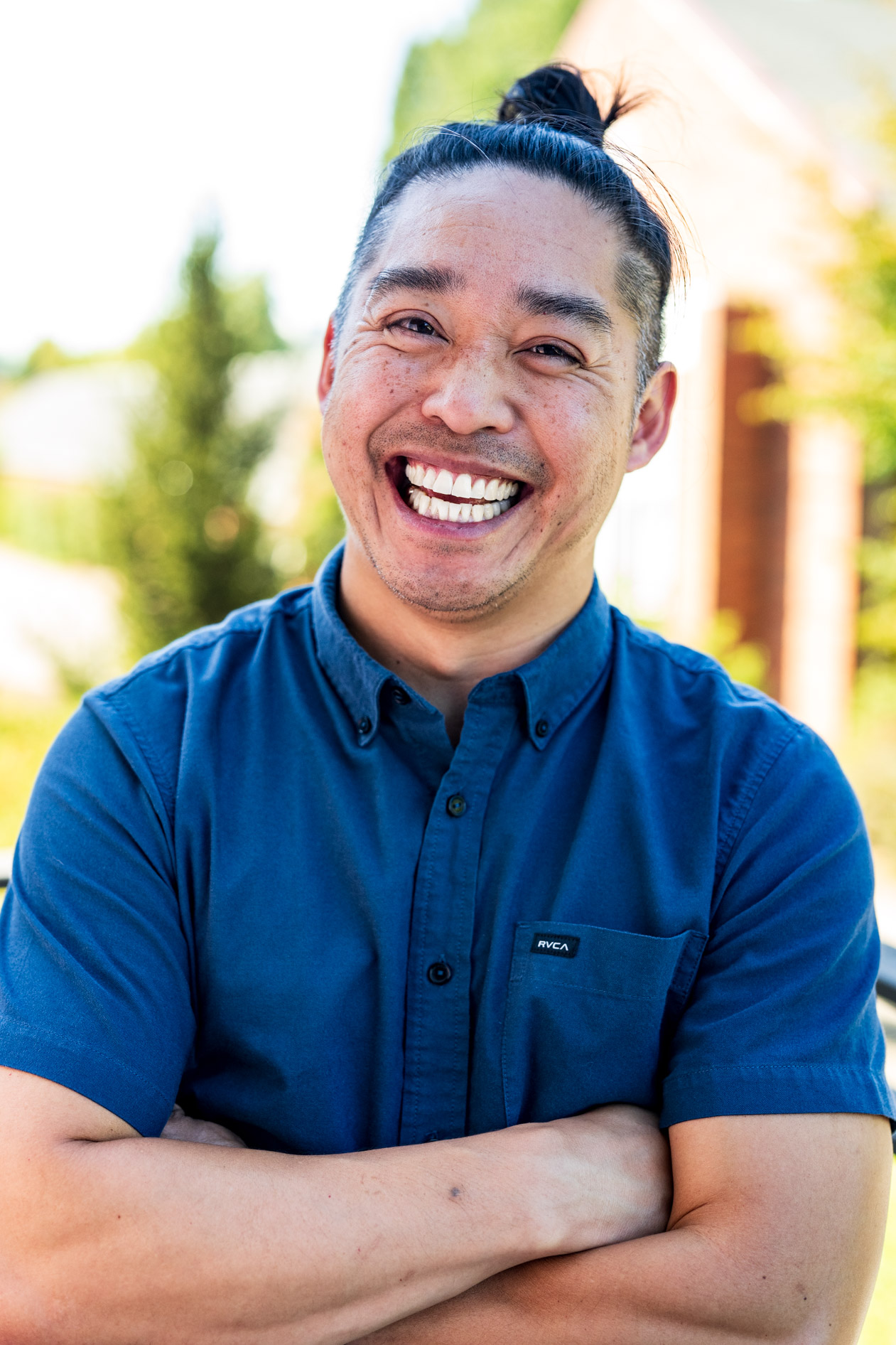
Human Centric Media designed a production process that truly honored Willamette University’s distinguished faculty and staff, making room for their charming personalities to connect with audiences.
It’s atypical for photographers to spend much time on a headshot. The quicker you run subjects through, traditional logic says, the more people you can photograph in a day, and the more you make from the gig.
But these gig workers are missing the forest for the trees: a photograph illuminates the relationship between photographer and subject, and if you treat them like slabs of meat, that will show through in the end product. Cue eyes glazing over and audiences tuning out.
When Willamette University hired Human Centric Media to photograph their talented faculty and staff for the 2025-2026 school year, we knew it was the perfect opportunity to deploy our trauma-informed approach — giving each subject the space and time to express their genuine wisdom and approachability.
How You Treat People Matters
If you want to come out of a narrative development process with assets that will stand the test of time, you can’t design your production like an assembly line.
Any experienced business owner will tell you: people invest not just in the benefits of a product or service, but the human beings behind them. They want to connect with the why behind the work.
Higher education is no different. Students want to know that their significant investment in a degree will net them unique wisdom and perspective — helping them develop the worldview they need to succeed.
The faculty and staff at Willamette University are each motivated from a different place, and this philosophical diversity is core to the student experience. It’s not just curriculum that makes for an excellent education, it’s the relationships you build along the way, and what they nurture inside of you.
Meeting Subjects Where They’re At
It’s normal for subjects to come to their photo session with apprehension — most experiences with photographers tell them that their uniqueness will be lost, their best side ignored and their smile superficially manufactured. These experiences go all the way back to their childhoods!
Human Centric Media designed a trauma-informed production process that puts the relationship first. We take the time to get to know each and every subject, what motivates them and how they want to be seen.
We always ask people about their previous experiences — what’s felt bad in the past, and how we can do better. Part of what you see in these radiant portraits is that time investment. It’s about more than comfort: we nurture the connection, and the presence it makes space for.
Producing Evergreen Assets
A portrait or headshot produced in the traditional, cookie cutter way shows what a person looked like on a given day. The utility of that photograph in your long-term communications effort is negligible.
But when Human Centric Media takes the time to design a safe container, and get to know subjects for who they are, the resulting campaign materials reflect the depth of that relationship.
These smiles don’t just speak to a slice of life, they reflect the way Willamette University treats its faculty, and the energy that trickles down to the student body.
You can’t shortcut this process, audiences can tell when your interest is genuine.
Are your communications materials built to last?